


ZERO-COST SOLAR ENERGY INVESTMENT DEVELOPMENT
ZERO-COST SOLAR ENERGY INVESTMENT DEVELOPMENT
I. ESCO MODEL INVESTMENT:
1. What is ESCO?
The ESCO model (Energy Service Company) is an energy service company model. This model allows companies like Newsun Energy Co., Ltd (NSE) and NSE's Investment Fund partners to provide energy services from design to construction, installation, operation, maintenance, risk management, profit-sharing from energy cost savings, and equipment transfer after the contract period without requiring customers to invest their own capital in the projects. The purpose of this model is to help customer partners save energy, reduce costs, and protect the environment.
NSE Company will evaluate energy efficiency and propose energy-saving solutions suitable for each business, helping them reduce electricity costs, minimize equipment operation costs, and improve productivity efficiency.
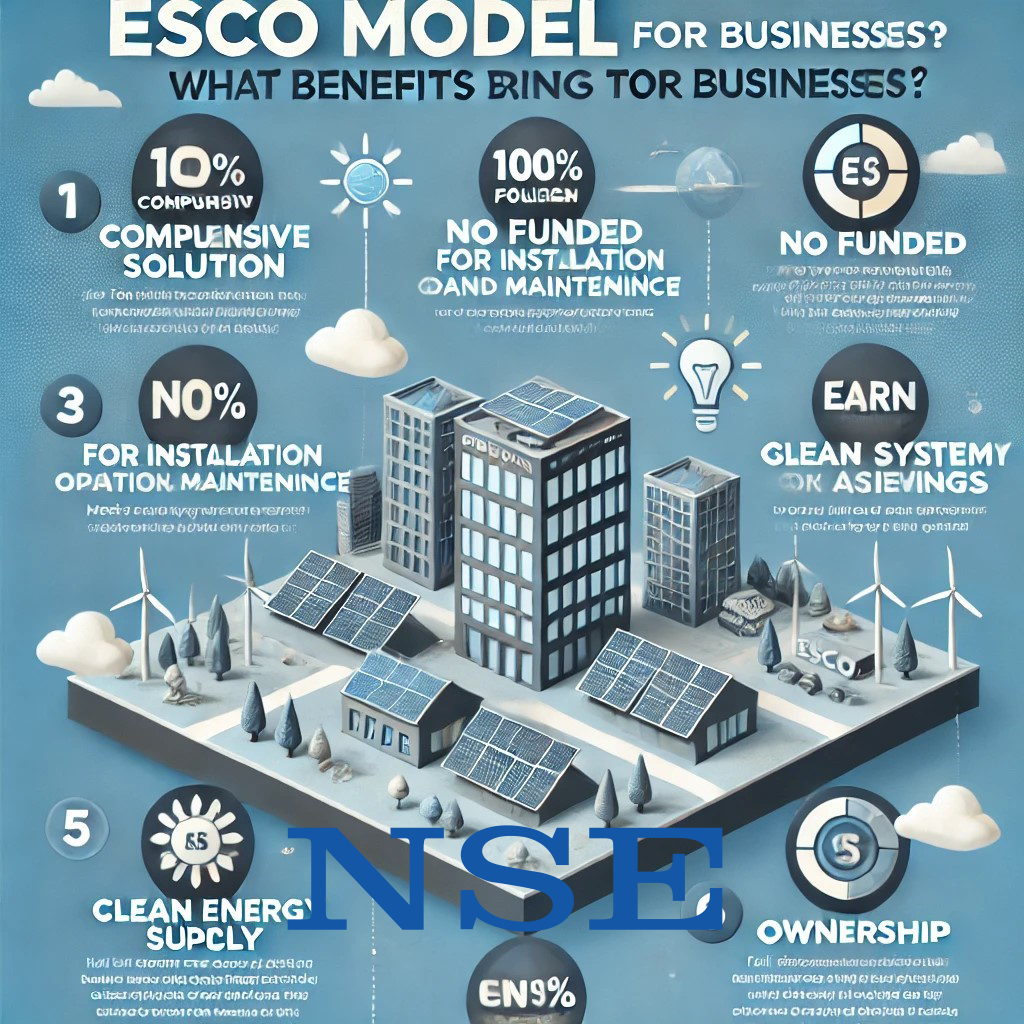
At Newsun Energy (NSE), we and our investment partners will provide 100% funding, design, construction, operation, and maintenance for the entire solar energy system tailored to the customer’s needs. NSE also offers a comprehensive solution including full capital financing, installation, operation, warranty, and maintenance.
2. Advantages and Disadvantages of the ESCO Model:
2.1 Advantages
- Zero-cost solar project: The installation, operation, and maintenance of the solar power system will be handled by the financial partner and the EPC unit. Businesses only need to use solar energy and start saving on their energy bills as soon as the system is operational.
- Lower costs compared to traditional electricity: Businesses will pay electricity bills to the financial partner, with electricity prices determined by the ESCO contract, usually 20-35% lower than EVN depending on the project's installation location.
- Low risk: The financial partner and EPC unit are fully responsible for system performance and maintenance, bearing all risks and reducing the burden on businesses regarding the solar energy system.
- Enhanced business value: Installing solar power helps build a green brand image and contributes to obtaining green certifications.
2.2 Disadvantages
- Lower cost savings compared to self-investment: The cost savings under the ESCO model will be lower than the self-investment option.
- Ownership period: Typically, ownership is transferred after 20 years, while self-investment with installment payments allows full ownership in just 5 years.
3. Business Evaluation Criteria:
This model is designed for businesses with high electricity consumption that need solar power to reduce their annual electricity expenses. However, there are specific evaluation criteria depending on the requirements of investment funds, such as:
- Industry: Manufacturing (textile, chemical, electronics, plastic, metallurgy, heavy industry, etc.), Commercial (office buildings, resorts, hotels, supermarkets, cold storage, showrooms, auto workshops, etc.)
- Annual revenue: From VND 200 billion (can be adjusted based on actual business conditions)
- Operating days: At least 6 days/week
- Electricity consumption: At least 80% of the installed system capacity
- Monthly electricity bill: At least VND 300 million. If lower, businesses may consider self-investment with a 5-year installment plan.
- Geographical location: Nationwide
- Roof area: Minimum of 3,000m2 for manufacturing enterprises or 15,000m2 for commercial organizations. No roof size limitation for self-investment options.
- Ownership transfer period: 15-20 years before businesses own and use the system for free.
II. 5-10 YEARS INSTALLMENT INVESTMENT PLAN:
This model helps customers access solar energy through flexible installment packages from financial funds, without limiting their monthly electricity consumption.
1. Advantages of this model:
- NO COLLATERAL REQUIRED.
- NO INITIAL CAPITAL REQUIRED.
- FULL OWNERSHIP AFTER 5-10 YEARS (depending on contract terms).
- Significant electricity cost savings during the contract period. After the contract ends, customers can use the electricity generated by the system for free.
- Increased business competitiveness by reducing electricity costs, allowing savings to be reinvested into expanding production, marketing, or R&D.
Conclusion: Investing in solar energy through installment payments is an extremely smart and sustainable solution. With support from financial funds, businesses and households can easily access clean energy, save on electricity costs without worrying about upfront investment, and increase property value.
III. IMPLEMENTATION PROCESS:
1. Consultation: Identifying potential customers, providing online or direct consultation. Assessing the customer’s needs and installation feasibility (electricity costs, roof area, etc.).
2. Document Collection: Collecting technical, legal, and financial documents (for businesses).
3. Design and Planning: Proposing optimal solutions for customers.
4. Contract Signing and Installation: Completing the system within one week for individual customers and 1-3 months for business customers.
5. Payment: According to contract agreement.
CUSTOMER DOCUMENTATION REQUIREMENTS:
|
No. |
Items |
Content |
|
1 |
Technical Documents |
|
|
2 |
Legal Documents |
|
|
3 |
Financial Documents |
|